Things to do in Luxor Egypt offer some of the most extraordinary ancient experiences in the world. From the legendary Valley of the Kings to a magical hot air balloon ride at sunrise over the West Bank, Luxor is a destination that delivers wonder at every turn. Whether you are planning a day trip from Hurghada or spending several days exploring the temples and tombs, this guide covers everything you need to know about the best things to do in Luxor in 2026.
Why Luxor Should Be on Every Egypt Itinerary
Often called the world’s greatest open-air museum, Luxor was the capital of ancient Egypt during the New Kingdom period — the golden age of the pharaohs. For over 500 years, this city served as the political, religious, and cultural centre of one of the most powerful civilizations in human history.
The city is divided by the Nile into two distinct areas. The East Bank was the land of the living — home to the great temples where ancient Egyptians worshipped their gods. The West Bank was the land of the dead — where pharaohs, queens, and nobles were buried in elaborate rock-cut tombs hidden in the desert hills.
Today, Luxor contains roughly one-third of all the world’s ancient monuments. No other city on earth comes close to this concentration of historical treasures. Whether you have one day or an entire week, there are plenty of incredible things to do in Luxor that will leave a lasting impression.
Best Things to Do in Luxor — East Bank
1. Karnak Temple Complex
The Karnak Temple Complex is the single most impressive religious site in Egypt — and arguably the world. This vast sacred precinct covers over 100 hectares and was built, expanded, and modified over a period of 2,000 years by more than 30 different pharaohs.
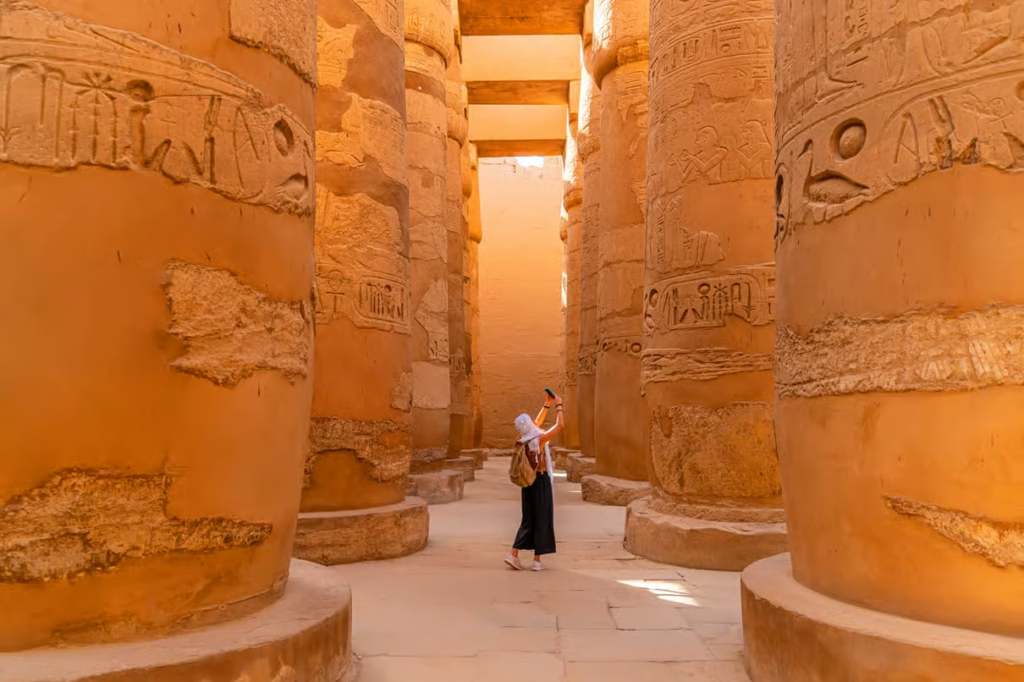
The centrepiece is the Great Hypostyle Hall, a forest of 134 colossal sandstone columns rising up to 21 metres high. Walking through this hall is one of the most awe-inspiring experiences in all of Egypt. The sheer scale is difficult to comprehend until you stand beneath these columns and feel how small you are in comparison.
Karnak is best visited early in the morning when the light is soft and the crowds are manageable. Allow at least 2 hours to explore the main areas, though you could easily spend half a day here if you want to see everything.
Tip: The Karnak Sound and Light Show in the evening is a popular way to experience the temple after dark, with dramatic lighting and narration that brings the history to life.
2. Luxor Temple
Located in the heart of modern Luxor on the East Bank of the Nile, Luxor Temple is one of the most beautiful temples in Egypt. Unlike Karnak, which was dedicated to multiple gods, Luxor Temple was primarily dedicated to the rejuvenation of kingship and the god Amun-Ra.
The temple is particularly spectacular when illuminated at night. The massive columns and statues glow under floodlights, creating an atmosphere that is both dramatic and deeply atmospheric. If you only have time for one evening activity in Luxor, visiting Luxor Temple after sunset is the one to choose.
Luxor Temple is connected to Karnak by the Avenue of Sphinxes — a 3-kilometre processional road lined with sphinx statues that has been recently restored and reopened to the public. Walking this ancient pathway is one of the most unique things to do in Luxor and gives you a sense of how the ancient Egyptians experienced these sacred spaces.
3. Luxor Museum
The Luxor Museum is often overlooked by visitors who rush between the major temples, but it is one of the finest museums in Egypt. The collection is small compared to the Grand Egyptian Museum in Cairo, but it is beautifully presented and focuses exclusively on artefacts found in the Luxor area.
Highlights include a stunning collection of statues from the Karnak Temple cachette, royal mummies, and military equipment from ancient Egyptian armies. The museum is air-conditioned, making it a welcome break from the midday heat and one of the best indoor things to do in Luxor during the hottest part of the day.
Best Things to Do in Luxor — West Bank
4. Valley of the Kings
The Valley of the Kings is the single most important archaeological site in Egypt. Carved into the limestone cliffs of the West Bank, this royal necropolis contains the tombs of Egypt’s greatest pharaohs — including Ramesses II, Seti I, and the legendary boy king Tutankhamun.
Over 60 tombs have been discovered in the Valley, though only a rotating selection are open to visitors at any given time. A standard ticket gives you access to three tombs. The tomb of Tutankhamun requires a separate ticket, as does the spectacular tomb of Seti I — widely considered the most beautifully decorated tomb in the entire Valley.
The wall paintings inside these tombs are astonishing. Vivid scenes depicting the pharaoh’s journey through the afterlife, battles with supernatural creatures, and encounters with gods have survived for over 3,000 years in remarkable condition. The colours are still vibrant, the details still sharp.
Photography is not permitted inside most tombs in order to preserve the ancient paintings.
Luxor Day Trip from Hurghada — Valley of the Kings & Tutankhamun’s Tomb
Full-day guided tour with expert Egyptologist. Visit the Valley of the Kings, Karnak Temple, and Hatshepsut Temple. Includes hotel pickup, lunch, and air-conditioned transport.
5. Hatshepsut Temple
The mortuary temple of Queen Hatshepsut — Egypt’s most powerful female pharaoh — is one of the most architecturally striking monuments in the country. Built into the sheer cliffs of Deir el-Bahari on the West Bank, its three colonnaded terraces rise dramatically against the golden limestone backdrop.
Hatshepsut ruled Egypt for over 20 years during the 18th Dynasty and was one of the most successful pharaohs in Egyptian history. Her temple tells the story of her divine birth, her famous trading expedition to the Land of Punt, and her legitimacy as ruler.
The temple is reached via a long ramp that ascends through each terrace level. The views from the upper terrace across the Nile Valley are magnificent. Arrive early in the morning before the heat builds and the tour groups arrive.
6. Colossi of Memnon
These two enormous stone statues of Pharaoh Amenhotep III stand 18 metres tall on the West Bank plain. They once guarded the entrance to Amenhotep’s mortuary temple, which was the largest temple complex ever built in Egypt — even bigger than Karnak. Sadly, the temple itself was destroyed by earthquakes and flooding, but the two giant statues remain.
In ancient times, the northern statue was famous for producing a mysterious singing sound at dawn, caused by temperature changes in the cracked stone. The Romans repaired the statue, and the singing stopped forever.
Entry is free, making the Colossi of Memnon a perfect first or last stop on any West Bank tour.
7. Hot Air Balloon over the West Bank
A sunrise hot air balloon ride over the West Bank of Luxor is one of the most magical experiences in all of Egypt. Drifting silently over the Valley of the Kings, Colossi of Memnon, and Hatshepsut Temple as the first light of dawn breaks over the desert is an experience that stays with you forever.
Balloon flights depart before sunrise and last approximately 45 minutes. You will float at heights of up to 300 metres, giving you a bird’s-eye view of the entire Luxor landscape — the green strip of farmland along the Nile giving way to the golden desert where the ancient tombs are hidden.
This is consistently rated as one of the top things to do in Luxor by travellers from around the world.
4-Day Nile Cruise from Aswan — Abu Simbel & Hot Air Balloon over Luxor
The ultimate Nile experience. Cruise from Aswan to Luxor with stops at Kom Ombo, Edfu, and Karnak. Includes Abu Simbel visit and sunrise hot air balloon ride over the Valley of the Kings.
8. Medinet Habu — Temple of Ramesses III
One of Luxor’s most underrated monuments, the Temple of Ramesses III at Medinet Habu is remarkably well-preserved and retains much of its original painted decoration. The colours on the walls and ceilings are among the best-preserved in all of Egypt — vivid blues, reds, and yellows that give you a real sense of how these temples looked when they were new.
The temple’s outer walls feature dramatic carved reliefs depicting Ramesses III’s military victories, including a famous naval battle scene that is one of the earliest depictions of a sea battle in recorded history.
Far fewer tourists visit Medinet Habu compared to Karnak and the Valley of the Kings, which means you can often explore in relative peace and quiet. If you have time for only one lesser-known site in Luxor, make it this one.
9. Valley of the Queens
Located near the Valley of the Kings, the Valley of the Queens contains the tombs of royal wives and princes from the 19th and 20th Dynasties. The most famous is the tomb of Queen Nefertari — wife of Ramesses II — which is widely considered the most beautiful tomb in all of Egypt.
The paintings inside Nefertari’s tomb are extraordinarily well-preserved, with vivid colours and exquisite detail that rival anything in the Valley of the Kings. Access to this tomb is limited and requires a separate, more expensive ticket, but it is absolutely worth the cost if you appreciate ancient Egyptian art.
10. Nile Felucca Ride at Sunset
A traditional felucca sailboat ride on the Nile at sunset is one of the most peaceful and romantic things to do in Luxor. These traditional wooden sailboats have been used on the Nile for thousands of years, and the experience of gliding silently across the water as the sun sets behind the West Bank temples is unforgettable.
Most felucca rides last 1 to 2 hours and can be arranged from the Luxor corniche. This is a wonderful way to end a day of sightseeing and decompress after hours of walking through temples and tombs.
Day Trips from Luxor
Abu Simbel from Aswan
While not technically a day trip from Luxor itself, many travellers combine Luxor with a visit to Aswan and the spectacular Abu Simbel Temples. The twin temples of Ramesses II and Nefertari were carved directly into a mountainside over 3,000 years ago and are among the most impressive monuments in Egypt.
The temples were famously relocated in the 1960s in a massive international engineering project to save them from the rising waters of Lake Nasser. The story of how these enormous structures were cut into pieces and reassembled on higher ground is almost as remarkable as the temples themselves.
Abu Simbel Day Trip from Aswan
Visit the colossal temples of Ramesses II with expert guide and hotel pickup — from $70 per person
Dendera and Abydos Temples
For travellers who want to go beyond the standard Luxor itinerary, the temples of Dendera and Abydos offer an extraordinary experience with far fewer crowds. The Temple of Hathor at Dendera is one of the best-preserved temples in Egypt, with a famous astronomical ceiling that has fascinated visitors for centuries. The Temple of Seti I at Abydos contains some of the finest carved reliefs in all of Egyptian art.
Both sites can be visited as a day trip from Luxor, though it is a long day. Most guided tours cover both temples in a single trip.
Best Time to Visit Luxor
The best time to visit Luxor is from October to March when temperatures are comfortable for outdoor sightseeing. Daytime temperatures during these months range from 20°C to 30°C, which is pleasant for walking between temples and tombs.
Luxor summers are extremely hot. Temperatures regularly exceed 40°C in June, July, and August, and sometimes reach 45°C or higher. Sightseeing in this heat is physically demanding and potentially dangerous. If you must visit during summer, start very early in the morning and retreat to air-conditioned spaces by midday.
December and January are the busiest months for tourism. If you prefer fewer crowds, consider visiting in October, November, February, or March — you will still enjoy comfortable weather but with significantly fewer tour groups at the major sites.
Read our complete weather guide: Best Time to Visit Egypt — Month by Month Guide
Getting to Luxor
From Cairo: A 1-hour domestic flight is the fastest option. EgyptAir and Air Cairo operate multiple daily flights. Alternatively, the overnight sleeper train is a comfortable and atmospheric way to travel — you fall asleep in Cairo and wake up in Luxor.
From Hurghada: Luxor is approximately 3 hours by road from the Red Sea resort of Hurghada. Many visitors staying in Hurghada take a guided day trip to Luxor, which is one of the most popular excursions from the Red Sea coast.
From Aswan: A Nile cruise from Aswan to Luxor takes 3 to 4 days and is the classic way to experience both cities along with the temples in between. Alternatively, a 1-hour domestic flight connects the two cities.
Practical Tips for Visiting Luxor
West Bank vs East Bank: Most ancient tombs and mortuary temples are on the West Bank. The main living temples — Karnak and Luxor Temple — are on the East Bank, along with most hotels, restaurants, and shops.
How many days do you need? Two full days is the minimum to see the major highlights. Three to four days allows you to explore at a more relaxed pace and include lesser-known sites like Medinet Habu, the Valley of the Queens, and the Ramesseum.
Guided tours vs independent visits: While it is possible to visit sites independently, a knowledgeable Egyptologist guide makes a significant difference in Luxor. The history is so deep and layered that having an expert explain the stories behind the carvings and paintings transforms the experience from impressive sightseeing into genuine understanding.
What to wear: Lightweight, breathable clothing is essential. Cover your shoulders and knees when entering temples out of respect. A sun hat, sunglasses, and high-factor sunscreen are non-negotiable. Comfortable walking shoes are important — you will cover a lot of ground.
Best time of day: Visit outdoor sites early morning between 7am and 10am or late afternoon between 4pm and 6pm to avoid the worst of the midday heat. The Valley of the Kings opens at 6am — being among the first visitors is a special experience.
Hydration: Carry plenty of water with you at all times. Dehydration is a real risk, especially on the West Bank where shade is limited.
Photography: Photography is generally allowed in temples but prohibited inside most tombs in the Valley of the Kings and Valley of the Queens. A separate photography ticket is available for some tombs.
Browse All Luxor Tours
Ready to experience the wonders of Luxor? Browse our complete selection of expert-guided tours — all bookable with free cancellation and instant confirmation through GetYourGuide.